
This is an example page. It’s different from a blog post because it will stay in one place and will show up in your site navigation (in most themes). Most people start with an About page that introduces them to potential site visitors. It might say something like this:
Hi there! I’m a bike messenger by day, aspiring actor by night, and this is my website. I live in Los Angeles, have a great dog named Jack, and I like piña coladas. (And gettin’ caught in the rain.)
…or something like this:
The XYZ Doohickey Company was founded in 1971, and has been providing quality doohickeys to the public ever since. Located in Gotham City, XYZ employs over 2,000 people and does all kinds of awesome things for the Gotham community.
As a new WordPress user, you should go to your dashboard to delete this page and create new pages for your content. Have fun!

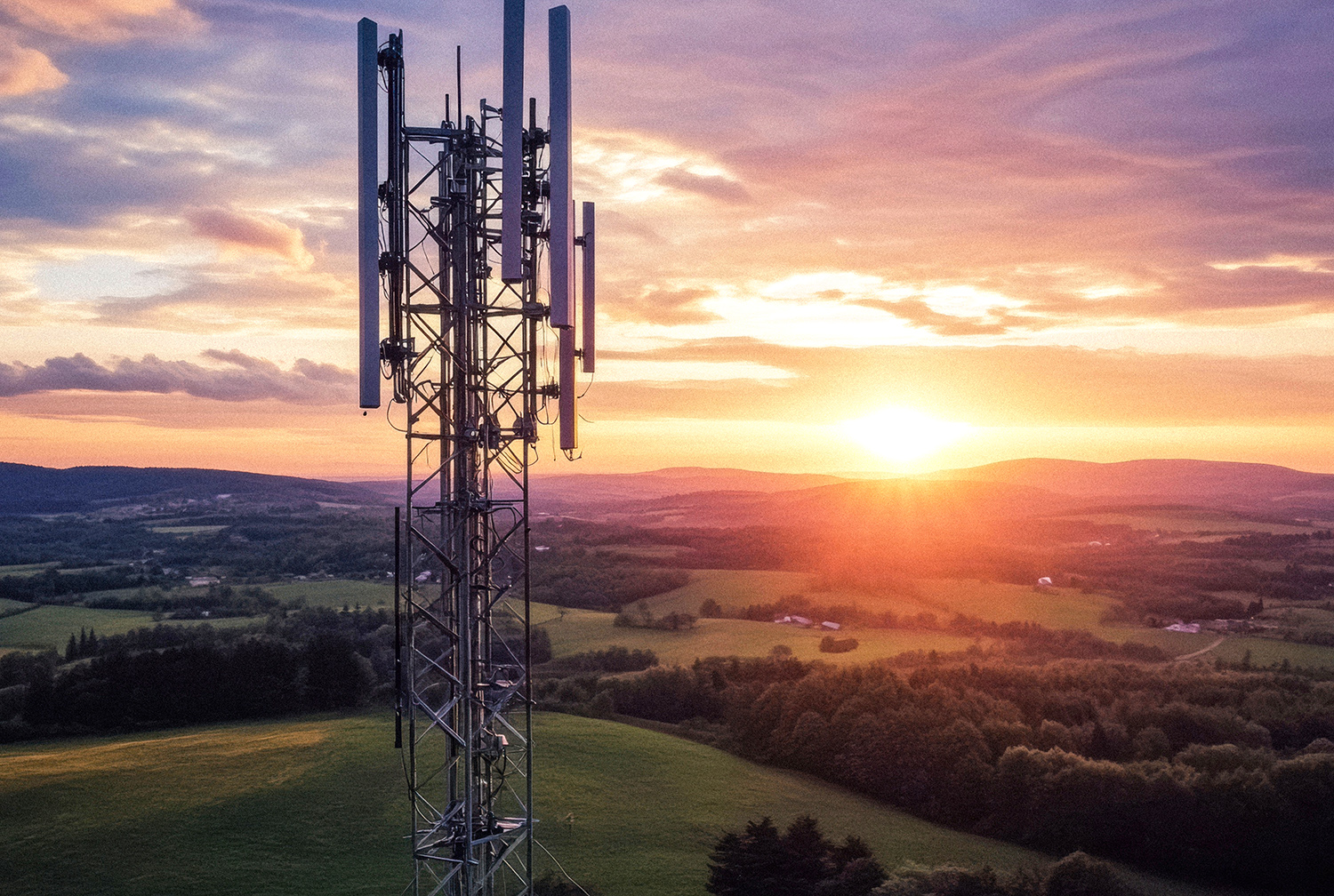
Wireless Internet for Rural Areas
Living outside urban centers shouldn’t mean slow or unreliable internet. Our wireless technology brings high-speed connectivity to rural homes, farms, and businesses—without the need for underground cables or long installation delays.
Sometimes wired connections are just not available.
- Coverage in hard-to-reach locations
- Fast, consistent speeds for work, streaming, and everyday use
- Quick installation with minimal disruption
- Local support from people who understand your area
Considerations for Wireless Internet at Your Home
Line of Sight & Terrain
Wireless internet often depends on clear or near-clear line of sight between towers and customer locations.
- Hills, trees, buildings, and vegetation growth can block signals
- Seasonal changes (leaf-on vs. leaf-off) can affect performance
- Elevation and tower placement are critical in rural areas
Tip: Site surveys and proper antenna mounting heights are essential.
Weather & Environmental Conditions
Rural networks are more exposed to the elements.
- Heavy rain, snow, ice, and wind can impact signal quality
- Extreme temperatures affect equipment lifespan
- Lightning protection and grounding are important
Choosing weather-rated equipment and planning for redundancy helps minimize downtime.
Power Availability & Stability
Rural locations may experience more frequent power outages.
- Backup power for towers and customer equipment
- Surge protection and battery systems
- Monitoring for power-related outages
Reliable power planning can significantly improve uptime.
Network Capacity & Scalability
As rural areas get better internet, usage grows quickly.
- Streaming, remote work, online education, and smart devices increase demand
- Oversubscription can degrade performance if not planned properly
- Backhaul capacity is just as important as last-mile coverage
Planning for growth prevents service quality issues later.
Backhaul Connectivity
Getting internet to the rural area is often the biggest challenge.
- Fiber backhaul may be limited or expensive
- Microwave or licensed wireless backhaul may be needed
- Redundant backhaul paths improve reliability
A strong backhaul strategy is the backbone of the entire network.
Customer Equipment & Installation
Rural installations vary widely.
- Mounting options (roof, pole, tower, barn, silo, etc.)
- Cable runs and grounding requirements
- Indoor Wi-Fi coverage in larger homes
Professional installation ensures consistent performance and fewer support calls.
Regulatory & Spectrum Considerations
Wireless providers must navigate rules and spectrum availability.
- Licensed vs. unlicensed spectrum
- Interference from other wireless systems
- Local zoning and tower permitting
Choosing the right frequencies balances range, speed, and reliability.
Support & Maintenance
Rural customers often rely on internet as a primary service.
- Fast response times matter more when alternatives are limited
- Remote monitoring and proactive maintenance reduce outages
- Clear communication during service interruptions builds trust
Local or regionally focused support is a major advantage.
Affordability & Pricing Models
Rural markets can be price-sensitive.
- Transparent pricing with no surprise fees
- Tiered plans that match usage needs
- Programs or partnerships that support underserved communities
Balancing affordability with network sustainability is key.
Future Technologies & Upgrades
Rural networks should be built with the future in mind.
- Compatibility with newer wireless standards
- Ability to add towers or sectors as demand grows
- Integration with fiber or hybrid solutions later
Designing for evolution avoids costly rebuilds.
Reliable Internet Where Others Can’t Reach
We deliver fast, dependable wireless internet to rural communities and multi-dwelling properties—connecting homes, businesses, and residents where traditional providers fall short.
Whether you’re miles outside city limits or managing a multi-unit building, our network is designed to keep you connected.
Wireless Internet
for Rural Areas
Living outside urban centers shouldn’t mean slow or unreliable internet. Our wireless technology brings high-speed connectivity to rural homes, farms, and businesses—without the need for underground cables or long installation delays.
Mobile Service Plans
1 GB
Just
$20.00
per month
30 GB
Just
$40.00
per month
50 GB
Just
$50.00
per month
1 GB
Data Refill
just $20.00
(each purchase)
Wireless Speed Packages
100/100Mb
$39.95
per month
300/150Mb
$49.95
per month
500/250Mb
$59.95
per month
750/250Mb
$69.95
per month
How We Compare to Most Other Wireless Providers
When you choose Optix, you’re not just getting a wireless signal — you’re getting next-generation broadband built to rival fiber in reliability and speed, backed by smart radio technology that adapts to real-world conditions. Whether you’re streaming, working from home, gaming, or connecting multiple devices, our service is engineered to keep you connected.
By combining the fiber network of Direct Communications with the advanced technology of Tarana, we’ve created the best option for rural internet.
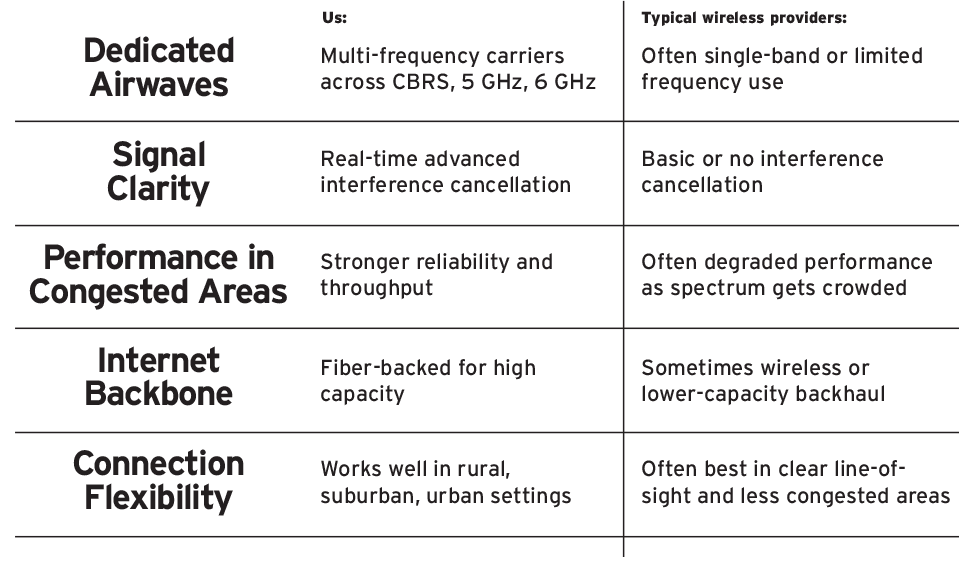
Dedicated Airwaves
Us: Multi-frequency carriers across CBRS, 5 GHz, 6 GHz
Typical Wireless Providers: Often single-band or limited frequency use
Performance in Congested Areas
Us: Stronger reliability and throughput
Typical Wireless Providers: Often degraded performance as spectrum gets crowded
Connection Flexibility
Us: Works well in rural, suburban, urban settings
Typical Wireless Providers: Often best in clear line-of-sight and less congested areas
Signal Clarity
Us: Real-time advanced interference cancellation
Typical Wireless Providers: Basic or no interference cancellation
Internet Backbone
Us: Fiber-backed for high capacity
Typical Wireless Providers: Sometimes wireless or lower-capacity backhaul
The Result:
Better Internet for You
How We Compare to Most Other Wireless Providers
When you choose Optix, you’re not just getting a wireless signal — you’re getting next-generation broadband built to rival fiber in reliability and speed, backed by smart radio technology that adapts to real-world conditions. Whether you’re streaming, working from home, gaming, or connecting multiple devices, our service is engineered to keep you connected.
By combining the fiber network of Direct Communications with the advanced technology of Tarana, we’ve created the best option for rural internet.
The result? Better internet for you!
Dedicated Airwaves
Us:
We use multi-frequency carriers across CBRS, 5 GHz, 6 GHz
Typical Wireless Providers:
They often use single-band or limited frequency


Signal Clarity
Us:
We use real-time advanced interference cancellation
Typical Wireless Providers:
They use basic or no interference cancellation
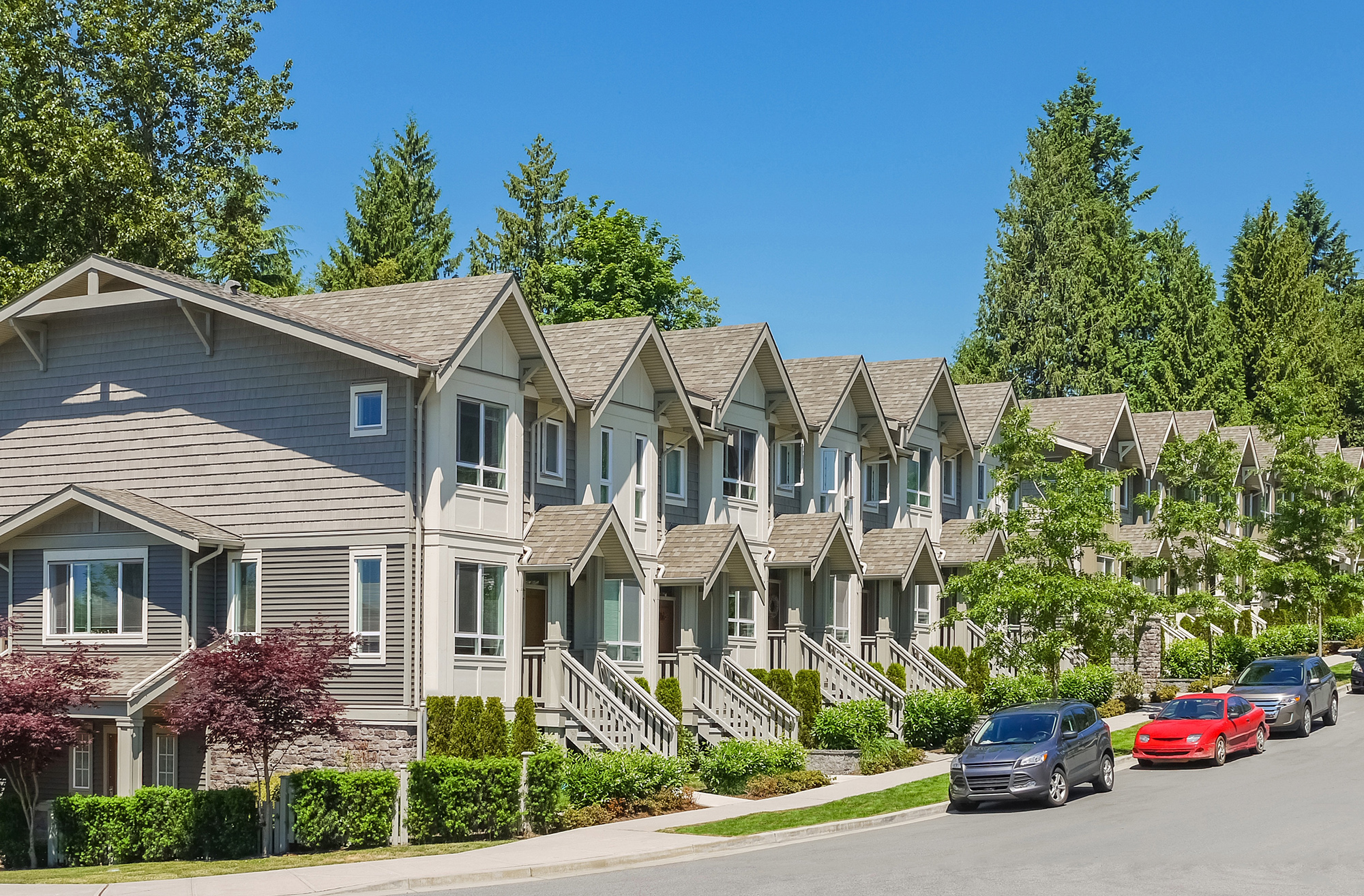
Internet Solutions for Multi-Dwelling Units
We partner with property owners, developers, and managers to deliver scalable, cost-effective internet service to apartments, condominiums, student housing, and other multi-dwelling communities.
How We Compare to Most Other Wireless Providers
When you choose Optix, you’re not just getting a wireless signal — you’re getting next-generation broadband built to rival fiber in reliability and speed, backed by smart radio technology that adapts to real-world conditions. Whether you’re streaming, working from home, gaming, or connecting multiple devices, our service is engineered to keep you connected.
By combining the fiber network of Direct Communications with the advanced technology of Tarana, we’ve created the best option for rural internet.
Us
Typical Wireless Providers
Dedicated Airwaves
Multi-frequency carriers across CBRS, 5 GHz, 6 GHz
Often single-band or limited frequency use
Signal Clarity
Real-time advanced interference cancellation
Basic or no interference cancellation
Performance in Congested Areas
Stronger reliability and throughput
Often degraded performance as spectrum gets crowded
Internet Backbone
Fiber-backed for high capacity
Sometimes wireless or lower-capacity backhaul
Connection Flexibility
Works well in rural, suburban, urban settings
Often best in clear line-of-sight and less congested areas
The result? Better internet for you!